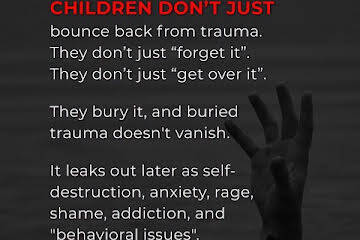
The bond between a child and their parent matters.

A parent is often a child's first source of comfort, security, familiarity, and emotional connection. From infancy, children develop relationships with the adults who care for them. These relationships help shape how children understand the world, manage emotions, build trust, and develop a sense of safety. When a child is suddenly separated from a parent or primary caregiver, the impact can reach far beyond the immediate moment of separation. Children may not understand why their parent is gone, where they are going, when they will see their family again, or whether they have done something wrong. For a child, separation can mean losing the person, routines, home, familiar surroundings, and relationships that have helped them feel secure.

1. The emotional impact of separation

Children experiencing separation may experience:

  • Fear, confusion, and uncertainty.

  • Grief and feelings of abandonment.

  • Anxiety about whether their parents are safe.

  • Difficulty trusting adults.

  • Sadness, withdrawal, or emotional distress.

  • Anger, frustration, or behavioral changes.

  • Difficulty adjusting to unfamiliar environments.

Not every child responds in the same way. Some children become withdrawn, while others may act out or struggle to communicate their feelings.

A child who appears calm does not necessarily mean they are unaffected.

2. Attachment and child development

Attachment is the emotional connection that develops between a child and their caregivers.

Consistent, responsive caregiving helps children develop a foundation of trust and emotional security.

When these relationships are disrupted, particularly repeatedly or for prolonged periods, children may struggle with:

  • Emotional regulation.

  • Trust and relationship building.

  • Feeling safe in unfamiliar environments.

  • Managing stress and uncertainty.

  • Developing healthy social connections.

Research from Harvard University's Center on the Developing Child explains how stable, responsive relationships help protect children from the effects of excessive stress and support healthy development.

Harvard Center on Developing Child: A guide to toxic stress and early childhood development

Harvard Center on Developing Child: Toxix Stress: What is Toxic Stress?

Harvard Center on Developing Child: Serve and Return: Back-and-forth Exchanges

3. The effects of prolonged stress

A child's stress response is designed to help them cope with challenging situations. However, prolonged or intense stress without adequate support can become harmful.

Researchers refer to one form of this as toxic stress.

Prolonged stress can affect:

  • Brain development.

  • Memory and concentration.

  • Learning and attention.

  • Emotional regulation.

  • Physical and mental well-being.

Supportive relationships with stable, caring adults can help buffer these effects. This is why maintaining safe, nurturing relationships is so important when children experience significant disruption.

See links in #2


4. The loss of familiarity and stability

Separation can mean much more than being away from a parent.

Children may also experience:

  • Leaving their home.

  • Changing schools or childcare.

  • Losing daily routines.

  • Separation from siblings.

  • Losing contact with extended family.

  • Losing connections with friends and their community.

  • Moving between unfamiliar caregivers or placements.

The American Academy of Pediatrics has described how removal and subsequent placement changes can compound children's existing difficulties and contribute to feelings of loss, rejection, and uncertainty.

5. Separation from siblings and extended family

When children enter out-of-home care, their relationships with siblings, grandparents, relatives, and other important people can also be disrupted.

These relationships can provide familiarity, comfort, identity, and a sense of belonging during an otherwise frightening experience.

Whenever it is safe and appropriate, children should have opportunities to maintain meaningful relationships with:

  • Brothers and sisters.

  • Grandparents.

  • Extended family members.

  • Trusted family friends.

  • Other important people in their lives.

  1. The federal Children's Bureau specifically emphasizes preserving family connections, exploring relative placements, and making reasonable efforts to keep siblings together when safe.

6. The importance of meaningful family contact

When children cannot safely live with their parents, maintaining appropriate family connections can still be important.

Family contact, when consistent with the child's safety and court orders, may help children:

  • Maintain emotional connections.

  • Understand that they have not been forgotten.

  • Preserve their family identity.

  • Maintain relationships with siblings and relatives.

  • Experience continuity during a difficult transition.

The quality, consistency, and appropriateness of family contact matter. Visits should be planned around the child's developmental needs, safety, and emotional well-being.

The U.S. Children's Bureau has specifically issued guidance encouraging meaningful family time during foster care placement.

7. What happens when separation becomes prolonged?

The longer a child experiences uncertainty and disrupted family connections, the more important it becomes to evaluate their individual needs and emotional well-being.

Prolonged separation may contribute to:

  • Ongoing grief and uncertainty.

  • Difficulty maintaining family relationships.

  • Challenges adjusting to new caregivers.

  • Feelings of rejection or disconnection.

  • Difficulties with identity and belonging.

Research reviews have found that the effects of parent-child separation can be more serious when separation is prolonged or accompanied by additional adversity. However, outcomes vary considerably between children.

Children should not be left without meaningful explanations, emotional support, and appropriate opportunities to maintain important relationships.

8. What should be considered before separating a family?

Protecting children must always remain the priority. When a child faces immediate danger, an emergency separation may be necessary.

However, whenever circumstances allow, decisions should consider both the risks within the home and the potential effects of separation.

Important considerations include:

  • Is the child facing an immediate and identifiable safety threat?

  • Can the concern be addressed safely without removing the child?

  • Are there supportive services that could help stabilize the family?

  • Could a safe relative or familiar caregiver provide temporary care?

  • Can siblings remain together?

  • Can the child remain connected to school and community?

  • How will meaningful parent-child contact be maintained?

  • What support will the child receive to address grief, anxiety, or trauma?

  • What specific conditions must be met for the child to safely return home?

The federal Children's Bureau emphasizes that child welfare decisions should consider children's attachments, family connections, safety, and individual needs—not simply procedural timelines.

9. Supporting families while protecting children

We believe protecting children and supporting families should not be treated as opposing goals.

When it is safe and appropriate, families should have access to meaningful resources that address challenges before they escalate into situations requiring separation.

These may include:

  • Mental health and counseling services.

  • Substance use treatment and recovery support.

  • Parenting education and family support programs.

  • Housing and financial assistance.

  • Domestic violence resources.

  • Disability accommodations.

  • Family preservation services.

  • Community-based support networks.

Families are not strengthened by simply identifying problems. They need access to realistic, appropriate support and opportunities to make meaningful changes.

When separation is necessary, children still deserve stability, nurturing care, meaningful family connections, and a plan that prioritizes their long-term well-being.

A message we want every visitor to remember


A child should never have to wonder if their family has forgotten them.

Children deserve to feel safe, loved, heard, and supported. Their emotional needs matter just as much as their physical safety.

Protect children. Preserve safe family connections. Support healing.


Research and further reading

  1. Harvard University – A Guide to Toxic Stress — Explains how prolonged stress affects childhood development and how supportive relationships can help.

  2. U.S. Children's Bureau – Achieving Permanency for the Well-being of Children and Youth — Federal guidance on preserving family connections, reunification, and children's well-being.

  3. Developmental Effects of Parent–Child Separation — A peer-reviewed research review published in the Annual Review of Developmental Psychology.

  4. Adverse Impact of Multiple Separations or Loss of Primary Caregivers — Research examining the effects of repeated caregiver separation.